HVAC · September 30, 2026
Best HVAC CRM in 2026 for Small and Mid-Size Shops
The best HVAC CRM in 2026 for small and mid-size shops, compared on published price, memberships, dispatch and flat rate by a company that makes one.
Blog · Pest Control
The best pest control CRM in 2026: five buying myths, published prices for GorillaDesk and Pocomos, and how PestPac, FieldRoutes and Briostack compare.
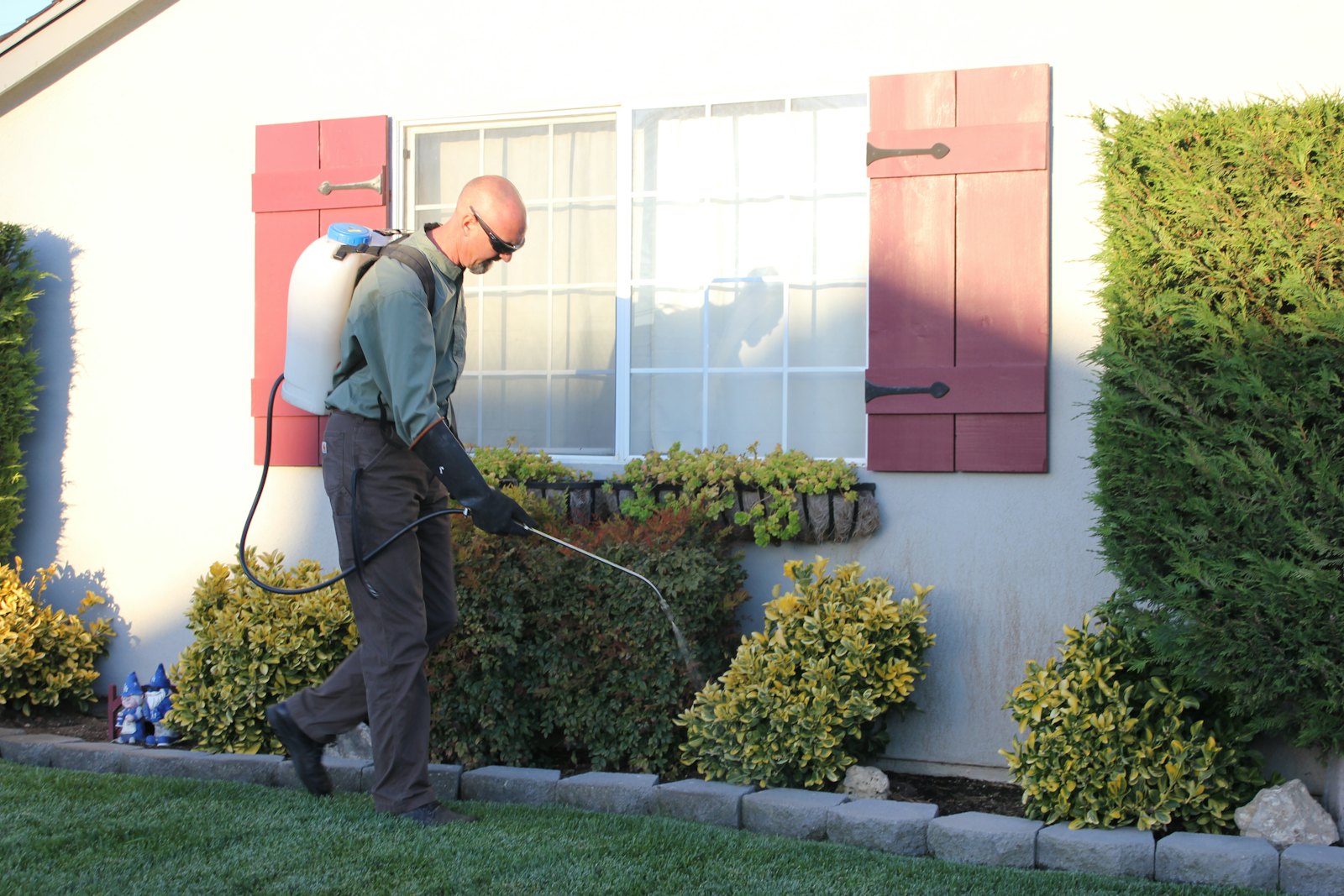
A pest control company does not sell jobs. It sells one stop that repeats four times a year, for years, at the same house. That is why the best pest control CRM looks different from the software a roofer or a plumber buys, and why a lot of the buying advice misses. This guide takes on five myths about pest control software, shows what each company publishes about its price, and says which shops should buy what.
Quick answer. The best pest control CRM for most small shops is built for pest routes. GorillaDesk Pro is $99 a month for one route. Pocomos is $239 a month at 150 active customers. PestPac, FieldRoutes and Briostack suit larger operations and quote by request. General field service tools fit mixed trade companies.
Cedar House publishes this guide and makes two products in it, Cedar House Stack and Cedar House Field. Neither is built only for pest control, and this guide says where that matters. Prices and features for the other companies were read on their own websites on October 30, 2026.
The best pest control CRM is the one priced and built for the number of routes you run today and the number you expect to run in three years. Sort yourself first, then look at products.
Only some of these companies publish a number, and the ones that do charge in three different ways: per route, per active customer or per user.
| Software | Priced by | Published price | Built for pest routes? |
|---|---|---|---|
| GorillaDesk | Route, unlimited users | First route: Basic $49, Pro $99, Growth $149 a month. Five routes: $209, $299, $399. No setup fee, no contract, free data move, 14 day trial | Yes. Chemical use records on Basic, device barcoding on Pro |
| Pocomos | Active and on hold customers, no user charge | $109 to 20 customers, $159 to 50, $239 to 300, $275 to 500, then 16 cents per customer. Texts $4 a month plus 4 cents each | Yes. Route optimization and door to door tools included |
| PestPac | Users and features | Not published, by demo | Yes. Material tracking, termite inspection and compliance records |
| FieldRoutes | Active customers | Not published, by request. No free trial | Yes. Growth and Corporate packages |
| Briostack | Not stated on the pages read | Not published, by demo | Yes. Chemical reporting and a tech app that works without a signal |
| Jobber | Plan and team size | One user billed monthly: Core $49, Connect $139, Grow $199. Annual is $29, $99, $149 after a first year promotion | No, general home service |
| Housecall Pro | Plan and team size | Basic, one user: $79 billed monthly, $59 billed annually | No, general home service |
| Cedar House Stack and Field | Per person | Stack $99 per user a month up to 5 users, then flat bands. Field $25 per seat a month. Founding prices, later $129 and $39 | No, multi trade, with recurring plans and door to door |
Sources: GorillaDesk pricing, Pocomos pricing, PestPac, FieldRoutes pricing, Briostack, Jobber and Housecall Pro pricing pages, and Cedar House pricing, all read October 30, 2026. Jobber's page also showed a sale ending that day, so check it before you compare.
The cheapest plan depends on your shape, so here are two made up shops priced from the numbers above. Shop A is one route, 150 active customers, and an owner who does the office work and runs the truck. Shop B is five routes, 1,500 active customers, five technicians and two office people.
| Software | Shop A: 1 route, 150 customers | Shop B: 5 routes, 1,500 customers |
|---|---|---|
| GorillaDesk Pro | $99 | $299 |
| Pocomos | $239 | $435 |
| Cedar House Stack plus Field | $124 (1 Stack, 1 Field) | $323 (2 Stack, 5 Field) |
| PestPac, FieldRoutes, Briostack | By quote | By quote |
Worked out from the pricing pages listed above, read October 30, 2026. Card processing, texting and add ons are extra on all of them. Cedar House shows founding prices.
GorillaDesk is the lowest published price at both sizes in this table, and it comes with pest specific records. Cedar House would need a separate answer for those records, which is a real cost in time. Pocomos costs more at both sizes here, but it never charges for a new person, which helps a shop adding summer sales reps.
A general field service CRM can book a visit, but a pest route has different daily needs. The work is hundreds of small repeat stops, not a few big jobs. You need a service cadence that books itself, the same stops grouped on the same days, a tech who sees what was applied last time, and billing that follows the agreement without anyone raising an invoice.
Jobber and Housecall Pro handle a lot of this well, and a lawn or pest side business inside a bigger service company can live on them. But neither pricing page read today listed chemical use records, while GorillaDesk, PestPac and Briostack all name them. If pest is your whole business, start with the tools built for it.
Chemical records cannot wait, because the duty comes with the license and not with your head count. What you must record, and for how long, is set by your state, so ask your own state pesticide regulatory agency and do not take a software company's word for it, ours included.
Software helps by catching the product and the amount at the stop, while the tech is standing there. PestPac describes storing application details with each job for audit ready records. Briostack reports on chemical usage from its dashboards. GorillaDesk lists material tracking and reporting on its lowest plan. If a product cannot produce that report, you are keeping a second system on paper, and that second system is the one that gets skipped in July.
Per user pricing is only one of three models in pest control, and it is the one that fits this trade least often. GorillaDesk charges by the route and includes unlimited users. Pocomos and FieldRoutes charge by active customers. Jobber, Housecall Pro and Cedar House charge by team size or by the person.
Each model rewards a different shop. Route pricing suits a company with tight, dense routes. Customer pricing suits a company that hires a lot of seasonal staff, since Pocomos says users and leads do not count toward the total. Per person pricing suits a small crew with many customers. Run your own numbers at today's size and at the size you want in three years, because a customer based price rises every time you sell a new account.
Route optimization differs a lot from plan to plan, so read the line under the word. GorillaDesk's Basic plan routes up to 25 stops at a time, and its Pro plan adds real time street routing with drive times. Pocomos says route optimization is included at no extra charge. PestPac, FieldRoutes and Briostack all sell it as part of the platform, so ask in the demo how it handles a whole month of recurring stops rather than one day.
That last point is what separates pest software. Putting one technician's Tuesday in driving order is the easy part, and Cedar House Stack does that with one click. Grouping a quarter's worth of recurring stops into dense days across several technicians is the harder job, and it is where a pest specific tool earns its price.
Door to door sales do not need a separate app, because much of the pest software market has built them in. Pocomos lists door to door sales tools and new customer setup in the field as included. Briostack sells sales territories and leaderboards. FieldRoutes lists mobile sales on both packages. A sale made at the door lands on the same account the technician will service, with no retyping.
A separate canvassing app still earns its place when the sales team is large, and our door knocking app checklist covers what to test, even though it was written for roofers. Check one thing either way: can a rep sign the agreement and collect the card at the door, and does the first service appear on a route without the office touching it?
Cedar House fits best when pest control is not the only thing you do, or when door knocking drives your growth and you want it in the same system as the office. In the Stack, a membership plan can carry up to 12 visits a year, billed monthly or yearly, with the months you choose. The year's visits are written down as owed the day a customer joins, so a paid visit can go unbooked but never unseen. A saved card is charged at renewal on your own Stripe account, retried up to three times a day apart, then the office is told.
Technicians and door reps both work in Cedar House Field at $25 a seat, and a customer signed on a porch is on one record with the office. This is the same plan and equipment thinking we describe in our HVAC CRM guide and on the HVAC page, where maintenance agreements play the same role.
Here is what it does not have. The Stack has no chemical application log and no state pesticide report. It has no device or trap barcoding, no termite inspection forms, no commercial logbook, no sample pest price book and no pest specific checklist. Routing puts one person's day in order and does not group recurring stops across a month. You would set up your own plans and keep chemical records another way.
Most pure pest control companies should look elsewhere first, and we would rather say so here than lose you three months in.
Test it with one real route and one real week, using your own customers.
Then price the winner at your real size, and check the Cedar House pricing page if you run several trades and want a per person number to compare against.
It depends on how the company charges. On October 30, 2026, GorillaDesk listed $49 to $149 a month for the first route and Pocomos listed $109 to $275 a month up to 500 active customers. PestPac, FieldRoutes and Briostack did not publish a price and quote by demo or request. Card processing and texting are usually extra, so ask for both.
Once you have more recurring customers than you can hold in your head, yes. The first thing that slips is usually a quarterly visit nobody booked, followed by an invoice nobody sent. A one route owner can start on a low cost plan with recurring visits, automatic billing and chemical records, then move up as routes are added.
Several tools can. GorillaDesk lists material tracking and reporting, PestPac describes storing application details with each job, and Briostack reports on chemical usage. Your state decides what has to be recorded and for how long, so check those rules with your state pesticide agency, then pull a sample report before you buy. Cedar House Stack does not have a chemical log.
Per route pricing tends to suit dense routes, since more customers on the same route do not raise the bill. Per customer pricing suits a company with many seasonal staff, because users do not count, though the bill rises as accounts grow. Price both at your size today and at the size you plan to reach.
Usually, but ask before you sign. GorillaDesk says it moves your data free, and Briostack quotes a customer on its easy conversion. Get a full export of customers, service history, agreements and chemical records from your current system before you cancel, and confirm saved cards will transfer, because card tokens often take a separate step with your payment processor.
Cedar House Stack publishes this blog and makes one of the products written about here. Where another company's price or feature is quoted, it was read from that company's own public pages on the date shown beside it.
Keep reading
HVAC · September 30, 2026
The best HVAC CRM in 2026 for small and mid-size shops, compared on published price, memberships, dispatch and flat rate by a company that makes one.
All trades · September 30, 2026
The best CRM for contractors in 2026, chosen in four steps by trade, team size, published price and must haves, from a company that makes one of them.
All trades · October 20, 2026
Switching CRM software as a contractor: a five week move plan, what to export, and the contract and trial terms Jobber, JobNimbus and others publish.